 Stock Trading
Now trade in ₹9 Per Order or ₹ 999 Per Month Plans.
Stock Trading
Now trade in ₹9 Per Order or ₹ 999 Per Month Plans.
 Future & Options
Access F&O contracts with advanced tools for hedging and speculation.
Future & Options
Access F&O contracts with advanced tools for hedging and speculation.
 Currency Trading
Trade in major currency pairs and manage forex exposure efficiently.
Currency Trading
Trade in major currency pairs and manage forex exposure efficiently.
 Commodity Trading
Diversify Trading with MCX & NCDEX by Trading in Gold, Silver, Base Metals, Energy, and Agri
Products.
Commodity Trading
Diversify Trading with MCX & NCDEX by Trading in Gold, Silver, Base Metals, Energy, and Agri
Products.
 Margin Trading Funding
Boost your buying power with upto 5X, Buy now Pay Later
Margin Trading Funding
Boost your buying power with upto 5X, Buy now Pay Later
 Algo Trading
Back test, Paper Trade your logic & Automate your strategies with low-latency APIs.
Algo Trading
Back test, Paper Trade your logic & Automate your strategies with low-latency APIs.
 Trading View
Leverage Trading View charts and indicators integrated into your trading platform.
Trading View
Leverage Trading View charts and indicators integrated into your trading platform.
 Advanced Options Trading
Execute multi-leg option strategies with precision and insights.
Advanced Options Trading
Execute multi-leg option strategies with precision and insights.
 Stock Lending & Borrowing
Earn passive income by lending stocks securely through SLB.
Stock Lending & Borrowing
Earn passive income by lending stocks securely through SLB.
 Foreign Portfolio Investment
Enable NRIs and FPIs to invest in Indian markets with ease and compliance.
Foreign Portfolio Investment
Enable NRIs and FPIs to invest in Indian markets with ease and compliance.
 IPO
Invest in upcoming IPOs online with real-time tracking and instant allotment updates.
IPO
Invest in upcoming IPOs online with real-time tracking and instant allotment updates.
 Direct Mutual Funds
0% Commissions by investing in more than +3500 Direct Mutual Fund Scheme.
Direct Mutual Funds
0% Commissions by investing in more than +3500 Direct Mutual Fund Scheme.
 Corporate FDRs
Earn fixed returns with low-risk investments in high-rated corporate fixed deposits.
Corporate FDRs
Earn fixed returns with low-risk investments in high-rated corporate fixed deposits.
 Stocks SIPs
Build long-term wealth with systematic investment plans in top-performing stocks.
Stocks SIPs
Build long-term wealth with systematic investment plans in top-performing stocks.
 Bonds & NCDs
Access secure, fixed-income investments through government and corporate bond offerings.
Bonds & NCDs
Access secure, fixed-income investments through government and corporate bond offerings.
 Depository Services
Safely hold and manage your securities with seamless Demat and DP services with CDSL.
Depository Services
Safely hold and manage your securities with seamless Demat and DP services with CDSL.
 RMoney Quick
Fast, hassle-free trading in one tap.
RMoney Quick
Fast, hassle-free trading in one tap.
 RMoney Rocket
Power-packed platform for active traders.
RMoney Rocket
Power-packed platform for active traders.
 Rocket API
Lightning-fast trading API for developers advanced algo traders.
Rocket API
Lightning-fast trading API for developers advanced algo traders.
 XTS Algo
Smart algo trading software for precision trades.
XTS Algo
Smart algo trading software for precision trades.
 Journey
Tracing our growth and milestones over time.
Journey
Tracing our growth and milestones over time.
 Mission & Vision
Guided by purpose, driven by long-term vision.
Mission & Vision
Guided by purpose, driven by long-term vision.
 Why RMoney Platform
Smart, reliable platform for all investors' needs.
Why RMoney Platform
Smart, reliable platform for all investors' needs.
 Management
Experienced leadership driving strategic financial excellence.
Management
Experienced leadership driving strategic financial excellence.
 Credentials
Certified expertise with trusted industry recognition.
Credentials
Certified expertise with trusted industry recognition.
 Press Release
Latest company news, updates, and announcements.
Press Release
Latest company news, updates, and announcements.
 Testimonials
Real client stories sharing their success journeys.
Testimonials
Real client stories sharing their success journeys.
 7 Reasons to Invest
Top benefits that make investing with us smart.
7 Reasons to Invest
Top benefits that make investing with us smart.
 SEBI Registered Research
Trusted insights backed by SEBI-compliant research.
SEBI Registered Research
Trusted insights backed by SEBI-compliant research.
 Our Technology
Advanced tools enabling efficient online trading.
Our Technology
Advanced tools enabling efficient online trading.
 Blog
Stay updated with expert insights, market trends, and trading strategies through our
informative blogs.
Blog
Stay updated with expert insights, market trends, and trading strategies through our
informative blogs.
 Video
Learn visually with easy-to-understand videos covering trading concepts, tips, and market
analysis.
Video
Learn visually with easy-to-understand videos covering trading concepts, tips, and market
analysis.
 Podcast
Tune in to insightful discussions and expert opinions anytime, anywhere.
Podcast
Tune in to insightful discussions and expert opinions anytime, anywhere.
 Telegram Community
Be part of an active trader community sharing ideas, updates, and market opportunities in
real-time.
Telegram Community
Be part of an active trader community sharing ideas, updates, and market opportunities in
real-time.
 WhatsApp Updates
Get instant alerts, key market updates, and important notifications directly on WhatsApp.
WhatsApp Updates
Get instant alerts, key market updates, and important notifications directly on WhatsApp.
 Financial Calculators
Plan your trades, margins, and returns efficiently with our smart calculation tools.
Financial Calculators
Plan your trades, margins, and returns efficiently with our smart calculation tools.
 Marketplace
Discover curated tools, strategies, and services designed to enhance your trading
experience.
Marketplace
Discover curated tools, strategies, and services designed to enhance your trading
experience.
 Daily Research Reports
Stay ahead with timely market insights, trends, and actionable analysis delivered every day.
Daily Research Reports
Stay ahead with timely market insights, trends, and actionable analysis delivered every day.
 Dedicated Advisory
Get personalized guidance and expert recommendations tailored to your trading goals.
Dedicated Advisory
Get personalized guidance and expert recommendations tailored to your trading goals.
 Research Team
Backed by experienced analysts delivering data-driven insights and market expertise.
Research Team
Backed by experienced analysts delivering data-driven insights and market expertise.
 Research Reports
Access in-depth reports covering stocks, commodities, and market movements to support
informed decisions.
Research Reports
Access in-depth reports covering stocks, commodities, and market movements to support
informed decisions.
 Feedback
Share your suggestions or concerns to help us improve your experience.
Feedback
Share your suggestions or concerns to help us improve your experience.
 Downloads
Access important forms, software, and documents in one place.
Downloads
Access important forms, software, and documents in one place.
 Locate Us
Find the nearest RMoney branch or service center quickly.
Locate Us
Find the nearest RMoney branch or service center quickly.
 Escalation Matrix
Resolve issues faster with our structured support escalation process.
Escalation Matrix
Resolve issues faster with our structured support escalation process.
 Back Office
Log in to view trade reports, ledger, and portfolio statements anytime.
Back Office
Log in to view trade reports, ledger, and portfolio statements anytime.
 Account Modification
Update personal or bank details linked to your trading account.
Account Modification
Update personal or bank details linked to your trading account.
 Fund Transfer
Transfer funds instantly online with quick limit updation to your trading account.
Fund Transfer
Transfer funds instantly online with quick limit updation to your trading account.
 Bank Details
View our registered bank account details for seamless transactions by NEFT, RTGS or IMPS.
Bank Details
View our registered bank account details for seamless transactions by NEFT, RTGS or IMPS.
 RMoney Rocket Web Version
Experience powerful web-based trading with advanced tools for algo traders.
RMoney Rocket Web Version
Experience powerful web-based trading with advanced tools for algo traders.
 Refer & Earn
Invite friends and earn rewards every time they trade with us.
Refer & Earn
Invite friends and earn rewards every time they trade with us.


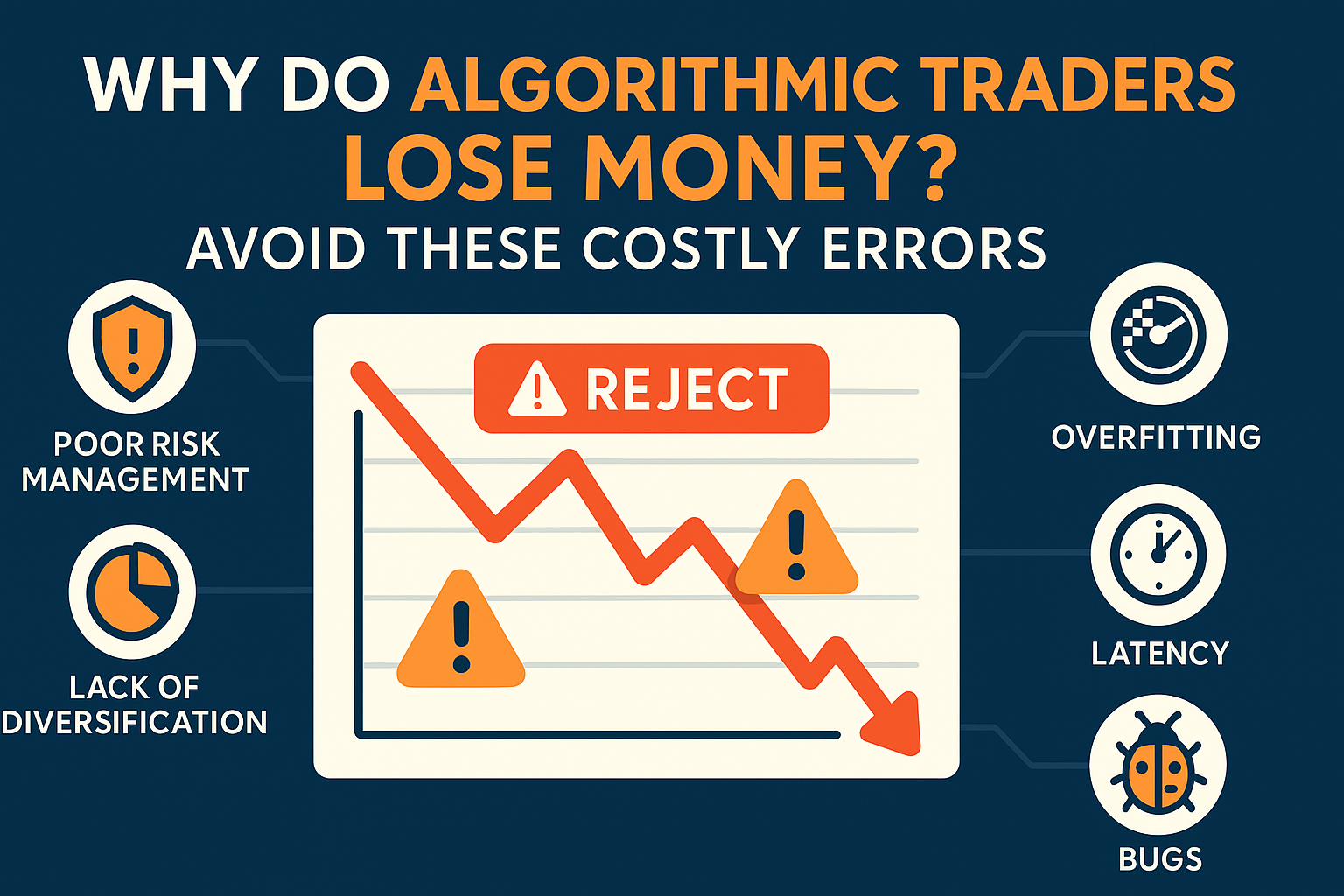
Why do Algorithmic Traders Lose Money: Avoid These Costly Errors?
By: Akriti Tomar | Date : Jul 23, 25
Introduction
Algorithmic trading has revolutionized modern financial markets, offering traders the power of speed, precision, and scalability. Yet, despite its technological edge, many Algo strategies fail to deliver consistent results when deployed in real-world conditions. The gap between backtested brilliance and live market Performance often lies in overlooked details.
In this article, we’ll uncover some critical reasons why Algo trading strategies are complex than it actually seems—and more importantly, how you can build more reliable systems by avoiding these mistakes.
- Overfitting: When Past Data Misleads Future Trades
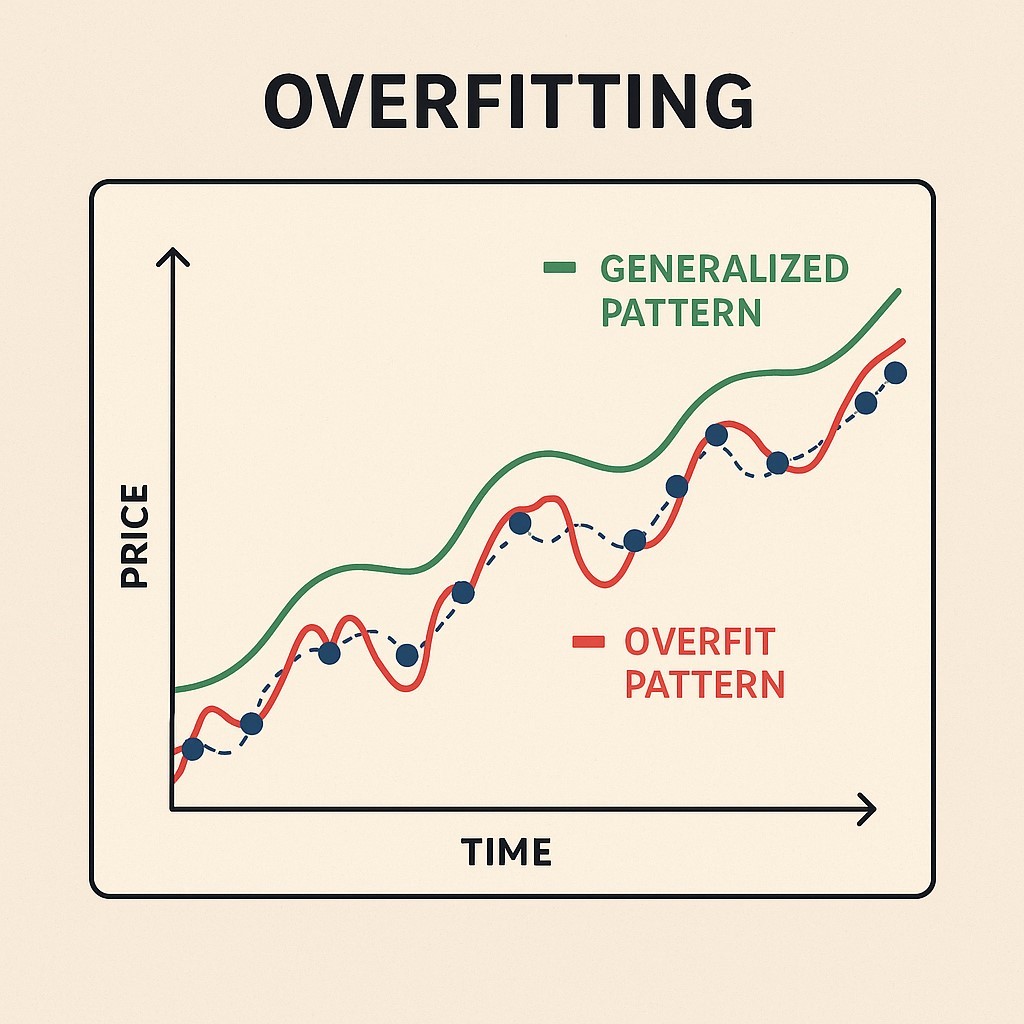
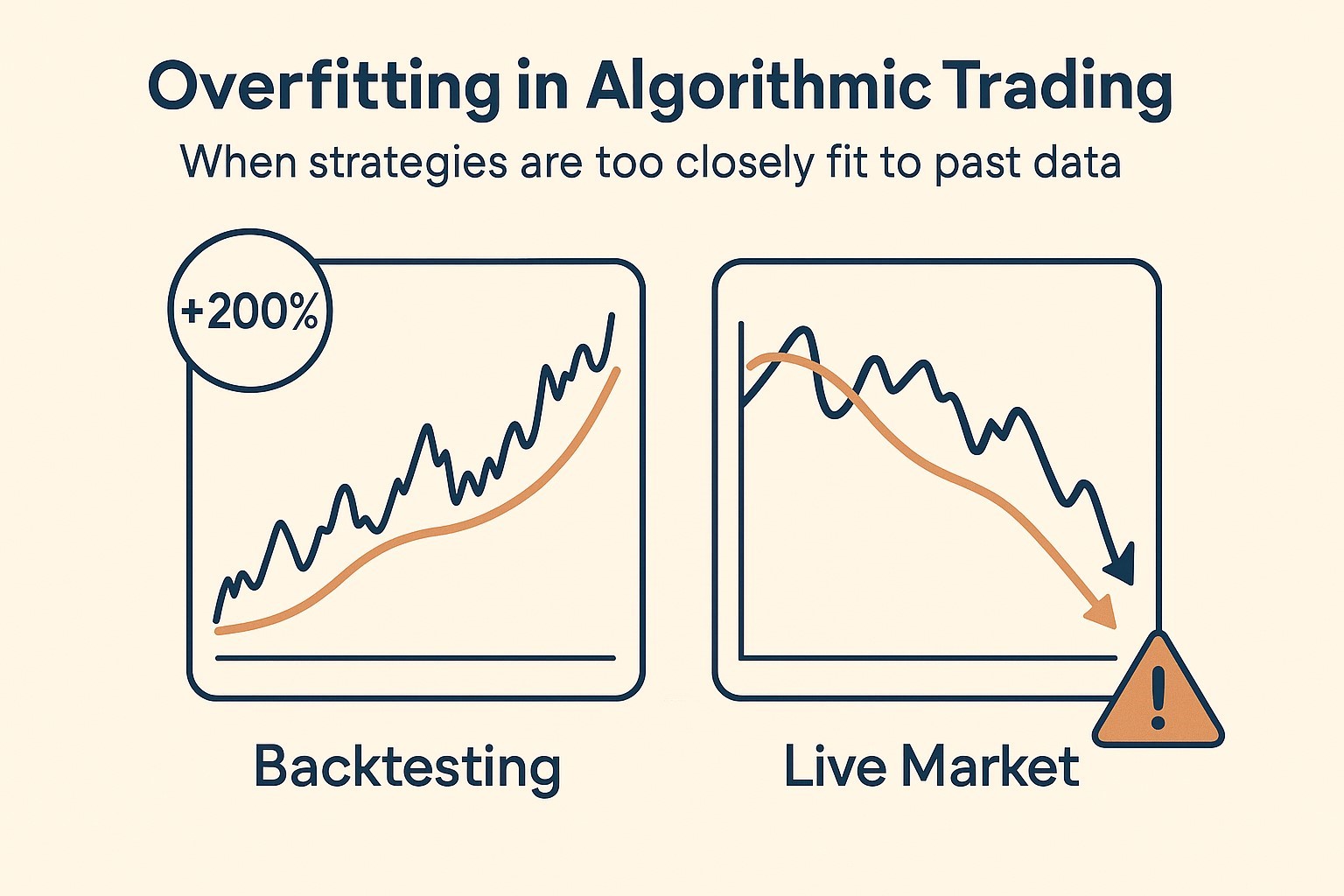
The Problem: Many traders design strategies that perform exceptionally well on historical data but collapse in live trading. This is known as overfitting—where the model is tailored too tightly to past patterns, capturing noise instead of signal.
Red Flags:
- Unrealistic backtest returns (e.g., 200% + annual gains)
- Strategies with more than 20 adjustable parameters
- Significant underperformance when tested on new market periods
What to Do Instead:
- Cross-Validate: Always test your strategy on out-of-sample data—reserve 30% of your historical dataset.
- Simplify Parameters: Limit yourself to 5–7 core variables.
- Test across Market Phases: Validate performance in bull, bear, and sideways markets.
A solid strategy should show dependable results across different indices like Nifty 50 and even global markets like the S&P 500.
2. Ignoring Transaction Costs: The Silent Profit Killer
The Problem:
Many traders get excited by strong backtested returns but overlook the real-world friction of trading—brokerage, slippage, taxes, and hidden charges. This blind spot quietly destroys strategy performance in live markets.
Real Example:
A trader running a high-frequency intraday system saw 12% profits in a paper-trading environment. But in live execution, the strategy posted a 5% loss due to cumulative impact of slippage and brokerage (₹0.10 per share slippage × 100+ trades/day = wiped-out gains).
Common Oversights:
- Ignoring brokerage costs in each trade leg
- Underestimating slippage during volatile or illiquid hours
- Executing large orders that move market prices (market impact)
- Forgetting statutory charges like STT/CTT, stamp duty, exchange fees, and GST
Execution Tip:
Even a ₹0.15 per share slippage across 500 shares daily adds up to ₹75/day, or nearly ₹1.5 lakh/year. That’s enough to flip a profitable strategy to a loss-maker.
What to Do Instead:
- Simulate Slippage in Backtests: Use realistic assumptions—₹0.05–₹0.15 for equities.
- Apply Volume Filters: Avoid placing orders that exceed 5% of a stock’s average daily volume to reduce market impact.
- Choose Smart Brokerage Plans: Use ultra-discount brokerage accounts when running high-turnover strategies.
- Calculate Break-Even Win Rate: Determine how many trades must succeed just to cover costs. This helps clarify your real risk-reward dynamics and sets more realistic expectations.
- Poor Risk Management: A Fast Track to Capital Loss
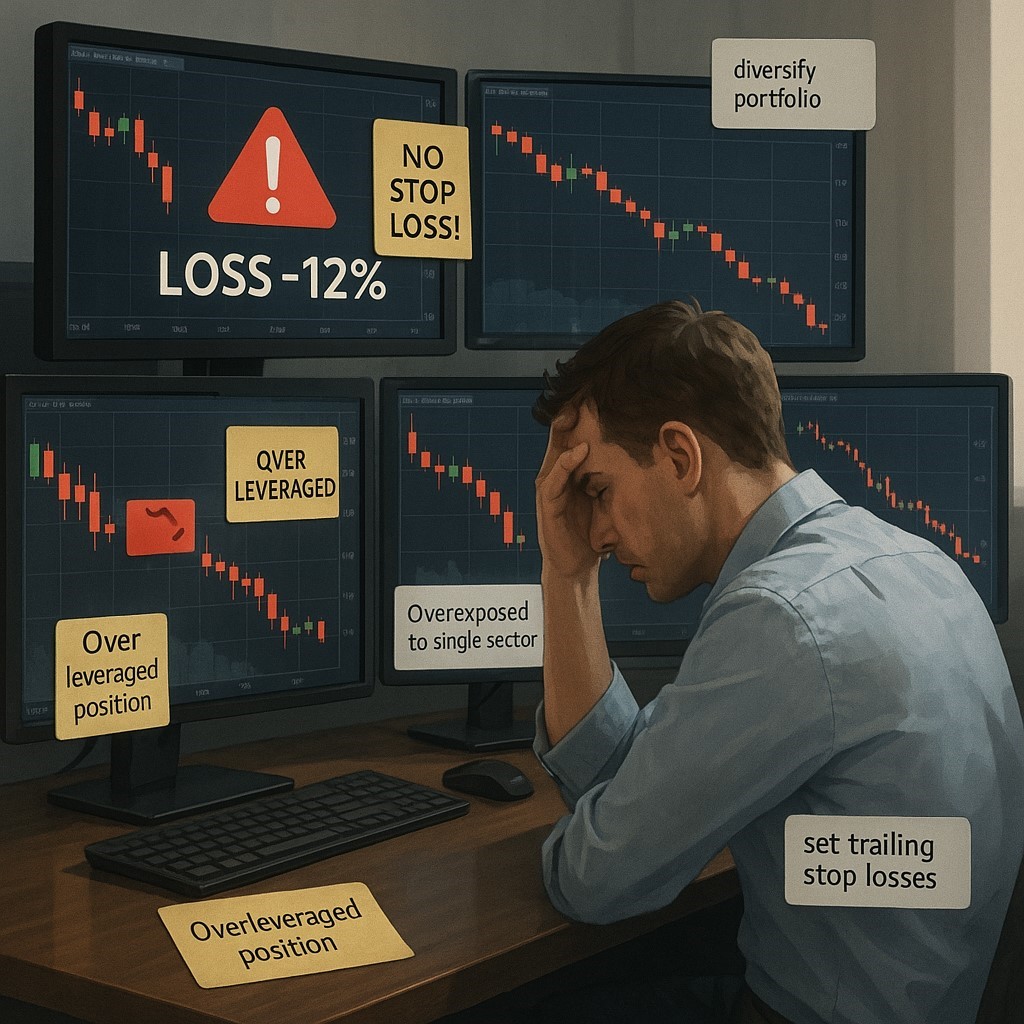
The Problem: Many Algo strategies focus heavily on entry signals while ignoring risk management factors like position sizing, stop losses, and asset diversification.
Case Study:
A trader risked 4% of capital on each trade using a leveraged Nifty futures strategy. Three losing trades wiped out 12% of their portfolio.
Common Oversights:
- Uniform position sizes regardless of market volatility
- Lack of stop-loss settings during volatile news events
- Heavy concentration in a single sector, like banking or IT
Risk Control Strategies:
- Volatility-Based Sizing: Use ATR (Average True Range) to dynamically size trades.
- Layered Stop Losses:
- Technical:5x ATR trailing stop
- Time-Based: Exit trades inactive after 72 hours
- Portfolio-Based: Cap daily drawdown at 8%
- Diversify Smartly: Spread capital across different asset classes—equity, commodities, debt—to reduce correlation risk.
4. Set and Forget? Think Again. Algorithms Need Maintenance
The Problem: Some traders believe that once an algorithm is live, it can run on autopilot forever. This assumption is risky—markets evolve, and so must your system.
Real Incident:
A gold arbitrage strategy failed for six months because it wasn’t updated after RBI revised import duties, altering the price dynamics.
Signs Your Algo Needs Review:
- Sharpe or Sortino ratios drop by over 30%
- A sudden shift in trading patterns (e.g., overnight trades from a day-only strategy)
- Changes in market rules (like T+1 settlements) affecting execution logic
Maintenance Checklist:
- Automated Alerts: Flag abnormal performance changes (e.g., >3% daily drawdown).
- Quarterly Tune-Ups: Recalibrate using the latest year’s data.
- Document Changes: Keep a log of all strategy modifications and their impact.
- Letting Emotions Override Automation

The Problem: Algo trading is meant to remove human emotion—but some traders still intervene during minor drawdowns, leading to missed opportunities and inconsistency.
Psychological Trap:
A trader deactivated the short-selling component of their system after a few failed trades—just before the market dropped 15%, a move the algo had correctly anticipated.
Common Mistakes:
- Manually skipping trades during losing streaks
- Constantly tweaking parameters after losses
- Increasing trade sizes impulsively to “recover” past losses
Fix the Process, Not the Trade:
- Strict Rule-Based Overrides: Only intervene during technical issues.
- Review Logs: If manual interventions happen more than twice a month, reduce discretion further.
- Trade in Isolation: Use separate devices or terminals to avoid emotional impulse during live trading hours.
Final Thoughts: Turning Failure into Strategy
Algorithmic trading isn’t just about clever code or complex math — it’s about discipline, constant learning, and proactive management. By avoiding these five common pitfalls, traders can build more resilient strategies that adapt to the real world—not just the backtest.
Smart Algo Trading Checklist:
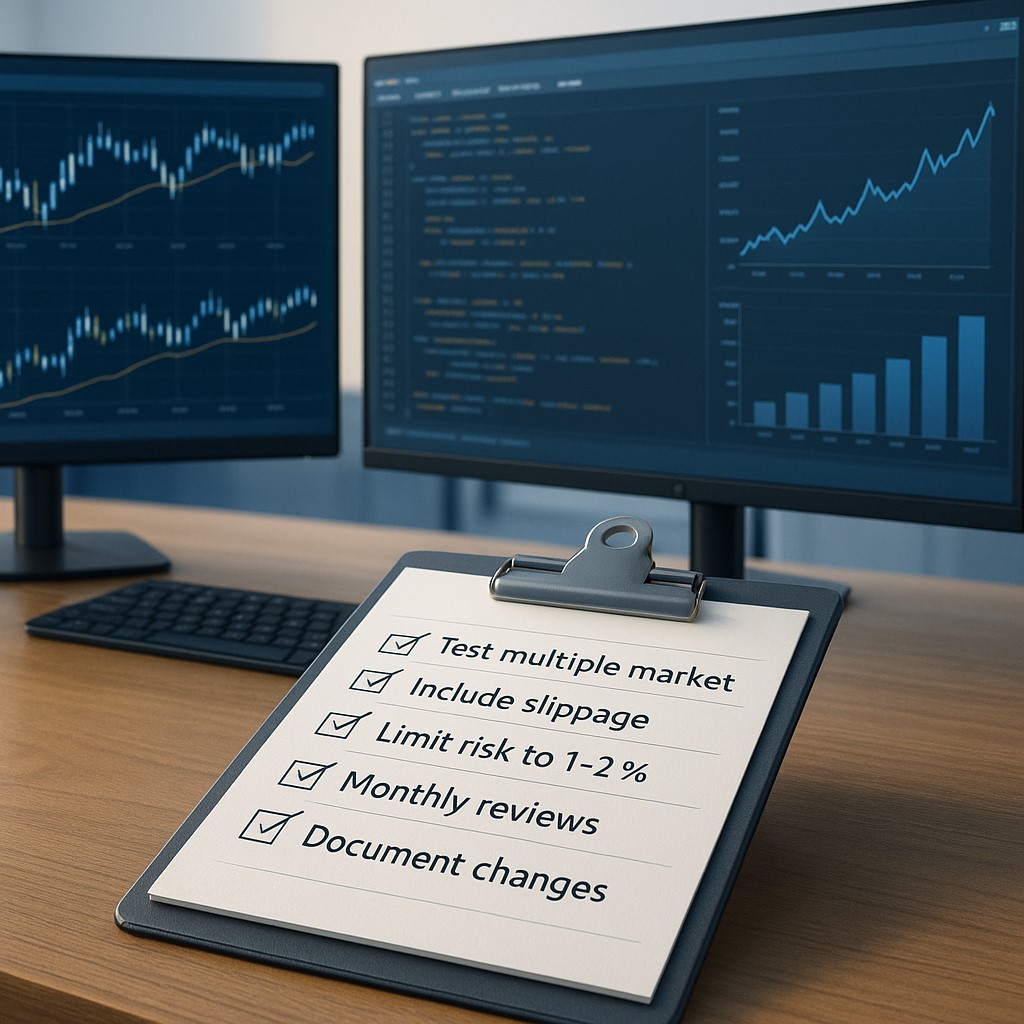
- Test across multiple market conditions
- Include realistic slippage and brokerage in simulations
- Risk no more than 1–2% of capital per trade
- Run monthly reviews of strategy performance
- Keep detailed records of every system change
For more information, contact RMoney at 0562-4266600 / 0562-7188900 or email us at askus@rmoneyindia.com
Disclaimer:-Investments in the securities market are subject to market risks. This content is for Educational purposes only and does not constitute financial advice.
Table of content
Categories
Open Demat Account 



Related Posts
-

I Don’t Want To Show My Subscriber List On My Profile Page? How To Ensure That?
You can easily hide your subscriber list from your profile. In the “Create Strategy” section...
-

Why is the Buy Average Price Incorrect in Your RMoney Portfolio?
You may sometimes notice that the Buy Average displayed for a stock in your portfolio...
-

Why a Sell Order on an Option Might Fail?
Trading options gives you flexibility and leverage, but there are times when you simply can’t...
-

How to Execute Spread Order on RMONEY ROCKET APP?
RMoney Rocket App allows you to conveniently place Spread Orders, a feature designed to help...





Filing Complaints on SCORES (SEBI) – Easy & Quick
- Register on SCORES Portal (SEBI)
- Mandatory details for filing complaints on SCORES:
- Name, PAN, Address, Mobile Number, E-mail ID
- Benefits:
- Effective Communication
- Speedy redressal of the grieva`nces


IT'S TIME TO HAVE SOME FUN!
Your family deserves this time more than we do.
Share happiness with your family today & come back soon. We will be right here.
Investment to ek bahana hai,
humein to khushiyon ko badhana hai.
E-mail
askus@rmoneyindia.com
Customer Care
+91-9568654321



Trade Endlessly with
RMoney
Deep Discount Brokerage Plan
At 999/Monthly
- Dedicated round the clock Advisory Support
- High performance in depth research
- Save more than ₹10,000 brokerage Per Month
- Ultra fast trading app