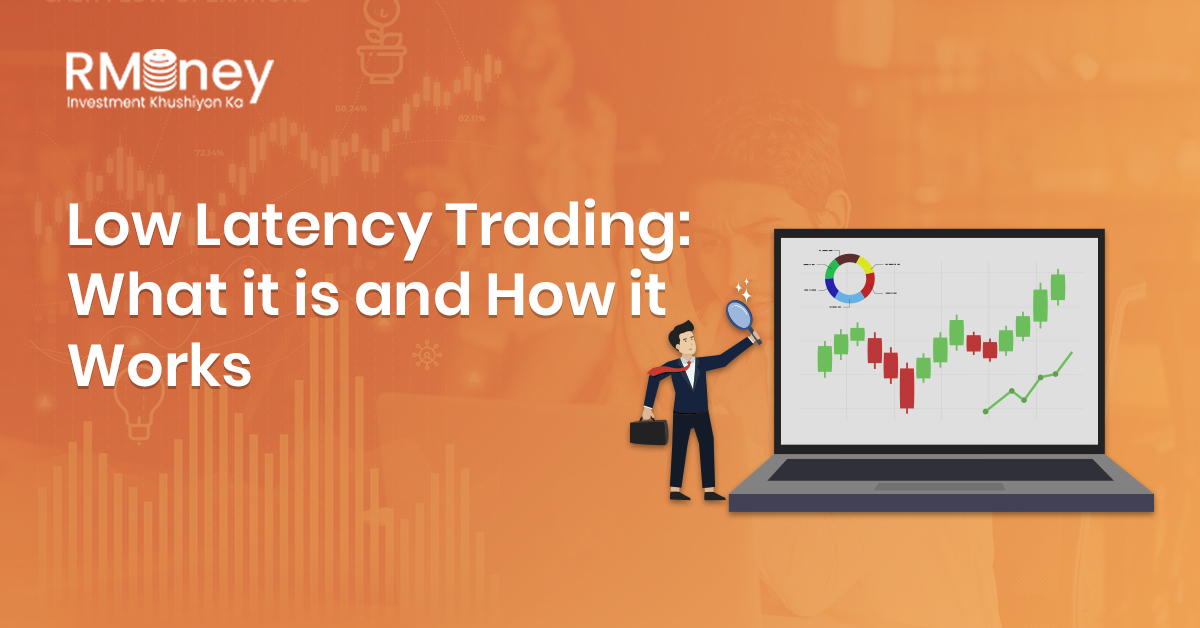
As markets continue to move faster, speed will play a role in who succeeds as a trader. When a trader can place their order(s) at the fastest possible time frame (send/modify/cancel) during a volatile market, they have a clear competitive advantage over those who cannot. Low-Latency Trading in India has developed tools for reducing millisecond delays when executing orders, giving HFT and advanced algo traders an edge in rapidly changing markets.
Studies show that faster order execution improves fill probability, reduces slippage, and enhances market quality. Research by Hasbrouck and Saar (2013) demonstrates that low-latency activity narrows bid-ask spreads, increases order-book depth, and improves execution efficiency, highlighting the critical role of speed in modern trading.
This blog explains what low latency trading is, how it works, why algo trading speed matters, and how traders in India can get started with the right technology partners.
What is Low Latency Trading
Low-latency trading focuses on reducing the overall time that it takes for traders’ orders to be sent to the market and executed. Technology, infrastructure and algorithms allow traders to place trades at much greater speeds than traditional means of trading, where delays in the execution of a trade can occur due to the delay of one or more components in the trading process (network, exchange servers, and algorithms).
For example, traders who trade using real-time data and high-speed strategies face greater risk as the amount of time it takes to receive their order executed increases. The use of low-latency trading reduces this risk by providing traders with predictability and immediate feedback based on changes in the market. High-frequency traders, proprietary trading firms, arbitrage traders and advanced retail algorithmic traders are able to execute trades more accurately and quickly than their competitors using low-latency trading techniques.
Key Takeaway: Simply stated, low-latency trading allows for increased speed to result in a decreased risk level, increased accuracy and increased opportunities for competitive advantage compared to non-low-latency trading.
Why Low Latency Matters in Modern Markets
The quick pace of the operational world is affected by the actions of key players worldwide when there is a major change that will impact the economy, be it a major economic report from a central bank or a change in government policy, or any other type of huge information release worldwide. Price movement is instantaneous in the market.
For example, if someone is trading in a highly volatile market place, their “bump” trades could show a time lag of 5 to 10 milliseconds (ms), which makes all the difference between a winner and a loser when trading in that market segment. Typically, traders who use HFT strategies must react to the price changes occurring on a real-time basis with no time lag.
Here is why low latency matters so much:
Better fill rates When you place an order, your goal is to be among the first to reach the market. The faster your order arrives, the higher the chance it gets filled at the price you expect. Even a small delay can push your order behind others, causing missed opportunities and potential profit losses.
Reduced slippage Slippage is the term used to describe when your order has been filled at a price you weren’t expecting to receive. You want to place your orders at the price you are willing to pay at the time you place your order, or as close to that price as possible.
More successful arbitrage Arbitrage opportunities last only for milliseconds, so the faster you execute your trades, the more profits you will realize from those opportunities.
Competitive edge for HFT firms HFT relies heavily on speed, and thus, you can only do HFT at an acceptable level using low-latency technology.
Enhanced algorithmic trading performance Real-time access to market data with low latency is essential for algorithms based on price micro-movements to accurately track their current position in real-time.
Example: Orders on NIFTY futures can be filled within milliseconds with 10-20 ticks of volatility upon Major Announcements. Using a low-latency technology to execute orders gives you the best opportunity of filling your order at the price you wanted, not at a price lower than what you set.
Who Benefits the Most?
High-Frequency Traders (HFT): need microsecond-level reaction times.
Scalpers: depend on small, quick price movements and tight spreads.
Arbitrage Traders: require instant execution to capture inter-market price gaps.
How Low Latency Trading Works
Low-latency trading is not one single technology but a combination of several optimised components that work together. These include network design, hardware, data feeds, coding practices, exchange connectivity, and physical proximity to servers.
Below are the core elements that make low-latency trading possible.
1. Direct Market Access or DMA
Direct Market Access (DMA) enables the trader to submit an order directly to the exchange’s order book without the need for intermediate steps performed by the brokers. After the broker has submitted the order to the exchange via an API, the system will then connect directly to the exchange.
DMA is critical for executing trades at very low latencies, as it removes the unnecessary delays caused by intermediaries (e.g., brokers) who may hold orders for a long time before sending them to a trading venue. For ultra-low-latency trading technology to achieve market speed, DMA must be used.
2. Co-Location Trading
One of the primary advantages of co-location is the significant decrease in latency (i.e., the time needed for a trading order to arrive at its intended destination). Located in the same data center as the exchange (or very near to it) means a trader has their server physically closer to the exchange. As servers get closer to one another, it will take less time for an order to reach its destination.
As a result, traders operating a high-frequency trading model benefit greatly from co-location as they can send their orders to the matching engine at a much faster rate than those sent from home or office. A prime example would be the co-location racks that NSE and BSE provide within their respective data centres; such racks allow traders to locate their servers only a few metres from the matching engines of both exchanges.
3. High Speed Network Infrastructure
To engage in low-latency trading, firms must establish the fastest connections available. Connections that support low-latency trading typically utilize fibre optics, routing protocols, network switches, and microwave communications. Microwave communications may be negatively impacted by weather conditions; however, microwave communications generally offer greater speed than fibre optics since they transmit data via electromagnetic waves rather than cables.
Thus, trading firms establish these high-speed connections to lower the time required for market data to travel to their systems. For example, even a one-microsecond increase in speed can result in significant advantages for trading firms that employ high-frequency trading strategies. In fact, most global high-frequency trading firms are now taking advantage of using FPGA-enabled network cards to lessen their delays by up to one microsecond.
4. Real Time and Tick-by-Tick Market Data
There are multiple formats for market data feeds. Retail-based standard data typically archives information so that it uses less bandwidth, which may result in a delay. In contrast, tick-by-tick data is required for low-latency trading to receive updates on every order book update.
Using the immediacy of the delivered data allows the algorithm to decide faster whether to submit, amend or withdraw an order. Regardless of the speed of data feed, the basis for high-speed algorithmic trading strategies is real-time data feeds. Most trading professionals utilise multicast tick-by-tick data feeds, which provide the information needed faster and allow for the quickest processing schedule possible, rather than web-based retail feeds.
5. Optimised Trading Algorithms
It’s also important to recognise that even when there is a lot of speed available within the network and hardware environments of trading platforms, it can be undermined by poorly designed and inefficient algorithms which create latency. This means it is critical for algo developers to use best practices when coding, create an architecture which is lightweight and to streamline the underlying logical flow of their strategies to cut down on computation time.
Algo developers often optimise:
• structure of the code
• how orders are handled
• the rules relating to risk
• data processing (pipelines)
The goal is to eliminate unnecessary processes and ensure the algorithm identifies and executes actions (trades) instantaneously.
6. Efficient Order Routing
Exchanges offer multiple order types and routing paths. Choosing the correct routing logic reduces unnecessary hops that add delays. Smart order routing systems automatically detect the fastest path for execution.
Who Uses Low Latency Trading
Many market participants use low-latency trading systems to execute trades quickly and accurately in order to remain competitive; this includes both institutional and HFT firms in India. At NSE, all co-location partner firms rely heavily on their respective uses of low latency technology.
Here are the key user categories and why they depend on low latency:
High-Frequency Trading (HFT) Firms Use microsecond-level execution to run strategies like market making, statistical arbitrage, and liquidity capture. Their entire business model depends on speed.
Proprietary Trading Desks Many prop desks in India operate from NSE’s co-location to ensure the fastest access to exchange data and ultra-quick order execution.
Institutional Traders Large institutions need low latency to reduce market impact, achieve better fill rates for big orders, and optimise VWAP/TWAP execution.
Market Makers Quote buy and sell prices continuously. Speed is essential to update quotes instantly when markets move to avoid losses.
Arbitrage Specialists Rely on rapid execution to capture tiny price differences across exchanges, segments (cash-futures), or global markets before they vanish.
Quant Trading Firms Their models depend on real-time analytics, nanosecond timestamping, and high-speed order flow processing to maintain performance.
Advanced Retail Algo Traders A growing segment in India is using APIs, VPS servers, and low-latency brokers to improve order execution speed and compete more effectively with larger players.
Low Latency Trading in India
In India, low-latency algo trading is gaining popularity. Most exchanges (especially the NSE and BSE) are investing heavily in providing the infrastructure that traders will require to access the market; for example, they offer co-location services at their data centers, Direct Market Access (DMA) accounts, and other forms of API based connection to the market.
Developing your own low-latency trading system is usually expensive and is very difficult to implement from a technological standpoint. Therefore, most traders will seek out brokers that have proven themselves to have reliable APIs, enhanced connectivity, and robust infrastructure.
How RMoney Helps Low Latency and Algo Traders
Choosing the right technology partner can put you in a strong position if you are looking to use low latency or algorithmic models in India. RMoney, as an algo trading broker in India, offers the tools, infrastructure, and support you will need to build reliable, high-speed trading systems.
RMoney enables advanced traders with:
RMoney API for Automated Trading RMoney has fast and developer-friendly APIs that support a variety of programming languages, including Python, Java, and C#. These allow you to efficiently build trading algorithms and deploy them.
Low Latency Execution India Infrastructure RMoney’s infrastructure enables optimised order routing with as few “hops” as possible for your orders, thereby increasing the speed at which they reach the exchanges. By providing latency benchmarks, RMoney helps you measure and optimise your trading performance.
Access to Market Data RMoney also supports detailed, real-time market quotes and tick-by-tick (TBT) data feeds, which can provide precision to your algorithmic models.
Stable and Reliable Connectivity Design and implementation of your algorithmic trading solution is contingent upon RMoney’s connectivity testing for high-load market conditions, which will ensure that your systems will perform reliably during times of extreme market volatility.
Support for Algorithmic Trading Models RMoney’s API and infrastructure can accommodate various algorithmic development methodologies, so you can develop algorithmic trading systems using your preferred language (Python, Java, C#, etc.) or framework.
Infrastructure and Deployment Guidance RMoney will help you with your choice of cloud or VPS setup, providing latency benchmarking information, and helping you optimise your trading strategy for better executions.
Fast and Seamless Order Execution Framework RMoney has been specifically developed for speed, which will reduce the amount of time it takes for your orders to reach the exchanges (reduce lag) and thus reduce or eliminate slippage in fast-moving market situations.
Additional benefits include:
Ultra-fast order routing with minimal hops
Robust API performance tested under high market load
Low downtime and stable connectivity during volatile events
Support for major algo frameworks (Python, C#, Java)
Tick-by-tick market data access
Infrastructure assistance and guidance on latency optimisation
Traders using RMoney receive an optimally designed high-performance trading environment for scaling their automated systems quickly and easily without unknowingly adding unnecessary complexity; they can also access an RMoney API through an algo trading India broker which offers low latency execution within India. Keywords: low latency, execution within India.
Final Thoughts
While high-speed, low-latency trading was once primarily utilised by the largest global predatory trading firms, it is now becoming part of the standard modern trading infrastructure used by all types of traders. An experienced trader who understands the technology behind latency, the underlying tools, APIs, and networks, and how to utilise them, holds a significant competitive advantage over their competitors in high-frequency markets, where orders can arrive at a broker in a millisecond or less.
To take advantage of the speed advantage available through the use of low-latency trading technology, a trader should also select a provider that offers trustworthy service and support. RMoney has built a reputation for providing reliable, low-latency, and compliance-focused business solutions that support algorithmic trading, as well as access to reliable order execution speed and powerful trading APIs. RMoney’s comprehensive offering provides algorithmic and high-frequency traders with the stability and support necessary to scale their operations confidently and successfully as they look to establish a firm foothold in these fast-paced and highly competitive modern electronic markets.
Disclaimer: Trading in equities, derivatives, and commodities involves market risk and may not be suitable for all investors. Past performance is not indicative of future results. This content is for educational purposes only and should not be considered as investment or trading advice.
I have expertise in simplifying complex concepts around trading and investing into clear, practical insights. At RMoney, I write on trading, equity markets, derivatives, and long-term investing to help readers make informed financial decisions. My writing is focused on delivering clarity and confidence to investors at every stage of their journey.

 Stock Trading
Now trade in ₹9 Per Order or ₹ 999 Per Month Plans.
Stock Trading
Now trade in ₹9 Per Order or ₹ 999 Per Month Plans.
 Future & Options
Access F&O contracts with advanced tools for hedging and speculation.
Future & Options
Access F&O contracts with advanced tools for hedging and speculation.
 Currency Trading
Trade in major currency pairs and manage forex exposure efficiently.
Currency Trading
Trade in major currency pairs and manage forex exposure efficiently.
 Commodity Trading
Diversify Trading with MCX & NCDEX by Trading in Gold, Silver, Base Metals, Energy, and Agri Products.
Commodity Trading
Diversify Trading with MCX & NCDEX by Trading in Gold, Silver, Base Metals, Energy, and Agri Products.
 Margin Trading Funding
Boost your buying power with upto 5X, Buy now Pay Later
Margin Trading Funding
Boost your buying power with upto 5X, Buy now Pay Later
 Algo Trading
Back test, Paper Trade your logic & Automate your strategies with low-latency APIs.
Algo Trading
Back test, Paper Trade your logic & Automate your strategies with low-latency APIs.
 Trading View
Leverage Trading View charts and indicators integrated into your trading platform.
Trading View
Leverage Trading View charts and indicators integrated into your trading platform.
 Advanced Options Trading
Execute multi-leg option strategies with precision and insights.
Advanced Options Trading
Execute multi-leg option strategies with precision and insights.
 Stock Lending & Borrowing
Earn passive income by lending stocks securely through SLB.
Stock Lending & Borrowing
Earn passive income by lending stocks securely through SLB.
 Foreign Portfolio Investment
Enable NRIs and FPIs to invest in Indian markets with ease and compliance.
Foreign Portfolio Investment
Enable NRIs and FPIs to invest in Indian markets with ease and compliance.
 IPO
Invest in upcoming IPOs online with real-time tracking and instant allotment updates.
IPO
Invest in upcoming IPOs online with real-time tracking and instant allotment updates.
 Direct Mutual Funds
0% Commissions by investing in more than +3500 Direct Mutual Fund Scheme.
Direct Mutual Funds
0% Commissions by investing in more than +3500 Direct Mutual Fund Scheme.
 Corporate FDRs
Earn fixed returns with low-risk investments in high-rated corporate fixed deposits.
Corporate FDRs
Earn fixed returns with low-risk investments in high-rated corporate fixed deposits.
 Stocks SIPs
Build long-term wealth with systematic investment plans in top-performing stocks.
Stocks SIPs
Build long-term wealth with systematic investment plans in top-performing stocks.
 Bonds & NCDs
Access secure, fixed-income investments through government and corporate bond offerings.
Bonds & NCDs
Access secure, fixed-income investments through government and corporate bond offerings.
 Depository Services
Safely hold and manage your securities with seamless Demat and DP services with CDSL.
Depository Services
Safely hold and manage your securities with seamless Demat and DP services with CDSL.
 Journey
Tracing our growth and milestones over time.
Journey
Tracing our growth and milestones over time.
 Mission & Vision
Guided by purpose, driven by long-term vision.
Mission & Vision
Guided by purpose, driven by long-term vision.
 Why RMoney Platform
Smart, reliable platform for all investors' needs.
Why RMoney Platform
Smart, reliable platform for all investors' needs.
 Management
Experienced leadership driving strategic financial excellence.
Management
Experienced leadership driving strategic financial excellence.
 Credentials
Certified expertise with trusted industry recognition.
Credentials
Certified expertise with trusted industry recognition.
 Press Release
Latest company news, updates, and announcements.
Press Release
Latest company news, updates, and announcements.
 Testimonials
Real client stories sharing their success journeys.
Testimonials
Real client stories sharing their success journeys.
 7 Reasons to Invest
Top benefits that make investing with us smart.
7 Reasons to Invest
Top benefits that make investing with us smart.
 SEBI Registered Research
Trusted insights backed by SEBI-compliant research.
SEBI Registered Research
Trusted insights backed by SEBI-compliant research.
 Our Technology
Advanced tools enabling efficient online trading.
Our Technology
Advanced tools enabling efficient online trading.
 Calculators
Access a suite of smart tools to plan trades, margins, and returns effectively.
Calculators
Access a suite of smart tools to plan trades, margins, and returns effectively.
 Margin Calculator
Instantly check margin requirements for intraday and delivery trades.
Margin Calculator
Instantly check margin requirements for intraday and delivery trades.
 MTF Calculator
Calculate MTF funding cost upfront to ensure full transparency before placing a trade.
MTF Calculator
Calculate MTF funding cost upfront to ensure full transparency before placing a trade.
 Brokerage Calculator
Know your exact brokerage charges before placing any trade.
Brokerage Calculator
Know your exact brokerage charges before placing any trade.
 Market Place
Explore curated investment products and trading tools in one convenient hub.
Market Place
Explore curated investment products and trading tools in one convenient hub.
 RMoney Gyan
Enhance your market knowledge with expert blogs, videos, and tutorials.
RMoney Gyan
Enhance your market knowledge with expert blogs, videos, and tutorials.
 Performance Tracker
Track our research performance with full transparency using our performance tracker.
Performance Tracker
Track our research performance with full transparency using our performance tracker.
 Feedback
Share your suggestions or concerns to help us improve your experience.
Feedback
Share your suggestions or concerns to help us improve your experience.
 Downloads
Access important forms, software, and documents in one place.
Downloads
Access important forms, software, and documents in one place.
 Locate Us
Find the nearest RMoney branch or service center quickly.
Locate Us
Find the nearest RMoney branch or service center quickly.
 Escalation Matrix
Resolve issues faster with our structured support escalation process.
Escalation Matrix
Resolve issues faster with our structured support escalation process.
 Back Office
Log in to view trade reports, ledger, and portfolio statements anytime.
Back Office
Log in to view trade reports, ledger, and portfolio statements anytime.
 Account Modification
Update personal or bank details linked to your trading account.
Account Modification
Update personal or bank details linked to your trading account.
 Fund Transfer
Transfer funds instantly online with quick limit updation to your trading account.
Fund Transfer
Transfer funds instantly online with quick limit updation to your trading account.
 Bank Details
View our registered bank account details for seamless transactions by NEFT, RTGS or IMPS.
Bank Details
View our registered bank account details for seamless transactions by NEFT, RTGS or IMPS.
 RMoney Quick Mobile App
Trade on-the-go with our all-in-one mobile trading app.
RMoney Quick Mobile App
Trade on-the-go with our all-in-one mobile trading app.
 RMoney Quick login
Quickly access your trading account through the RMoney Quick web-based trading.
RMoney Quick login
Quickly access your trading account through the RMoney Quick web-based trading.
 RMoney Rocket Web Version
Experience powerful web-based trading with advanced tools for algo traders.
RMoney Rocket Web Version
Experience powerful web-based trading with advanced tools for algo traders.
 RMoney Rocket Mobile Version
Trade anytime, anywhere with our feature-rich mobile trading platform.
RMoney Rocket Mobile Version
Trade anytime, anywhere with our feature-rich mobile trading platform.
 Rocket API
Lightning-fast trading API for developers advanced algo traders.
Rocket API
Lightning-fast trading API for developers advanced algo traders.
 XTS Algo
Smart algo trading software for precision trades.
XTS Algo
Smart algo trading software for precision trades.
 Authorised Person Partner with us as an Authorised Person to grow your financial business.
 Refer & Earn
Invite friends and earn rewards every time they trade with us.
Refer & Earn
Invite friends and earn rewards every time they trade with us.